




How AI Search Journey Will Transform Online Brands in 2026
The AI Search Journey refers to a search experience shaped by artificial intelligence, where results are based on user intent, behavior patterns, voice commands, conversations, and personalized insights rather than just keywords. The way we search for information online is evolving faster than ever. Traditional typing-based search is slowly making way for an intuitive, predictive, and conversational experience powered by Artificial Intelligence. By 2026, the AI Search Journey will not only alter how users discover information but will completely reshape how online brands operate, market, and connect with consumers. In this article, we'll explore how AI-powered search will transform user behavior, the customer journey, brand visibility, and digital marketing strategies for businesses around the world. What is the AI Search Journey? The AI Search Journey refers to a search experience shaped by artificial intelligence, where results are based on user intent, behavior patterns, voice commands, conversations, and personalized insights rather than just keywords. Unlike traditional

Google Answers: How to Optimize for AEO and GEO in late 2025
Google Answers Introduction Google Answers can refer to two different things in the SEO perspective: one is old or historical, and the other is current or modern, depending on the context. 1. Google Answers in old formats In the beginning, Google Answers was an official questions and answers service launched by Google in 2002. Google allowed different users to post questions and also pay researchers to find and write detailed answers. The researchers were scrutinized and approved by Google, and the answers were written by humans, not generated by artificial intelligence. The answers were categorized in different categories like technology, history, education, sports, science, etc. The users could browse previously answered questions in different categories—like technology, history, health, and science. However, Google closed the service in 2006 because free and user-generated question and answer platforms like Yahoo! Answers, Quora, and Reddit became more popular. Causes of Popularity of Yahoo Answers, Quora, and Reddit Around 2006 Rise
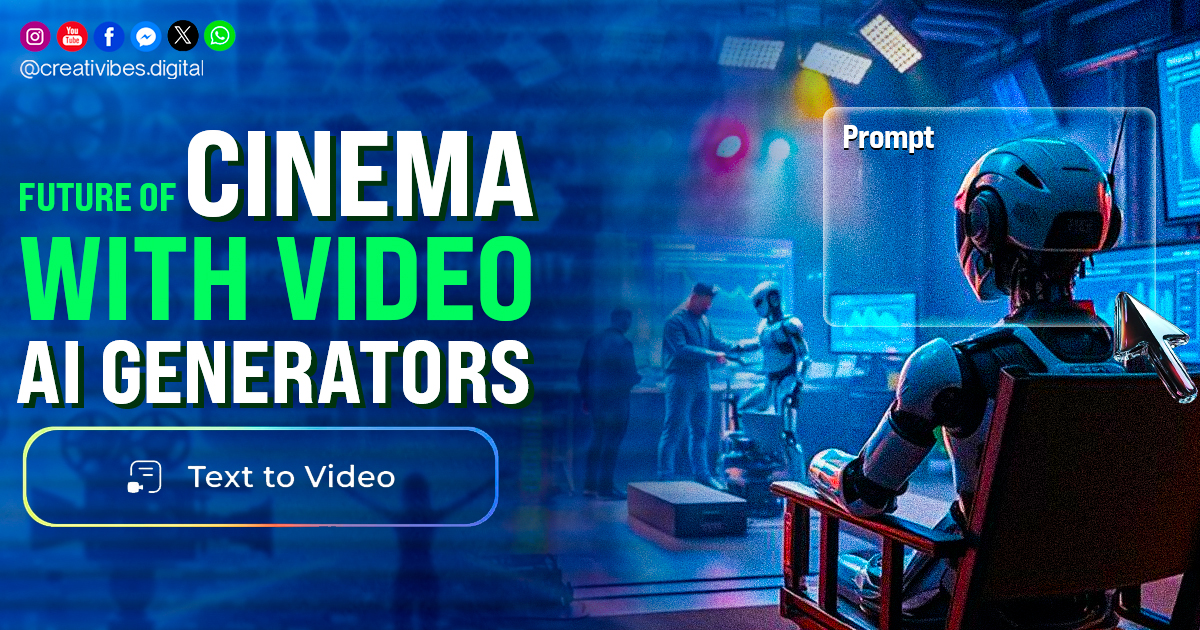
The Future of Cinema: How Video AI Generators Are Rewriting Filmmaking
Introduction: A New Lens on Storytelling The Future of Cinema is being transforming and reshaping by Video AI Generators. For more than a decade, cinema has reinvented itself with every major technological wave—from silent films to talkies, from black-and-white to Technicolor, and from practical effects to CGI. Now, we’re entering another revolution: AI-powered video generation. Some of the Text-to-video tools like OpenAI’s Sora, Runway Gen-2, and Pika Labs are pushing the boundaries of what’s possible in future. These tools can turn a short written prompt into beautiful, lifelike videos in seconds for which no camera, no crew, no massive budget required. The implications for filmmakers, studios, and storytellers are huge. The Rise of Video AI Generators Imagine typing, “A lonely astronaut drifts through a neon-colored galaxy” — and watching it instantly come to life in motion. That’s exactly what video AI generators do. In the past year alone, these models have improved dramatically. Runway’s Gen-2
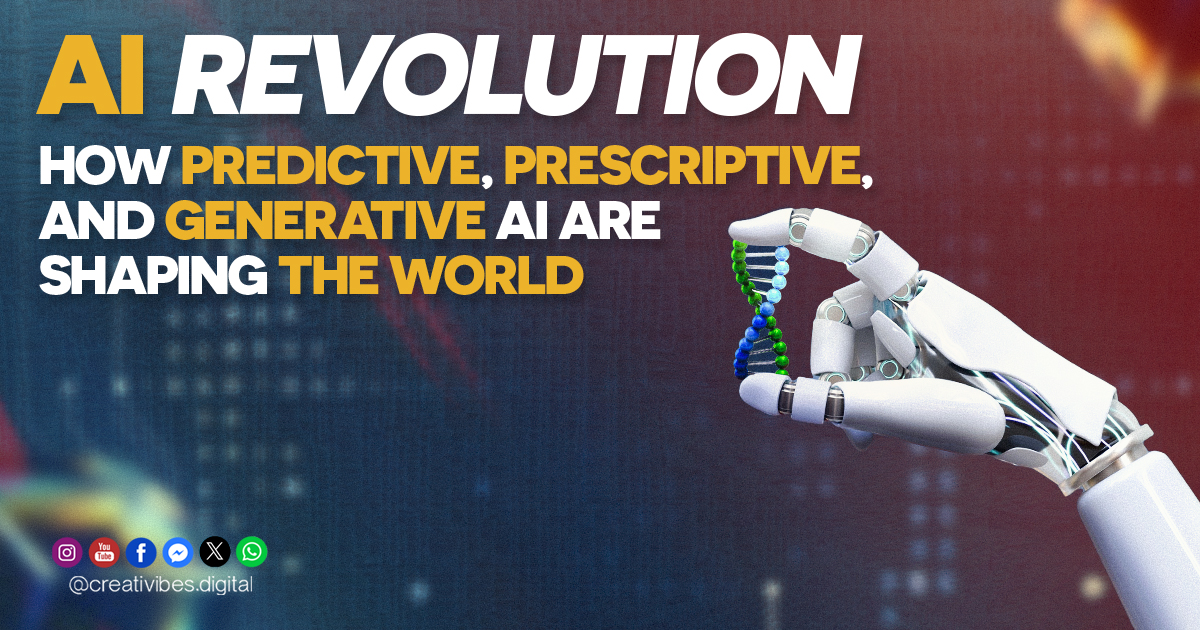
How Predictive, Prescriptive, and Generative AI are Shaping the World
The Artificial Intelligence Revolution is changing the modern face of doing business globally. Among its leading technologies are predictive, prescriptive, and generative AI, which transform processes, decision-making, and creativity. In this article, we'll explore how these three forms of AI are reshaping the world and impacting various sectors. Predictive AI: Powering Insights and Forecasting Predictive AI uses machine learning algorithms to analyze past trends and predict future outcomes. It's highly valuable in industries such as finance, healthcare, and retail, as it improves decision-making and resource allocation through accurate forecasts. Businesses use predictive AI to anticipate customer behavior, optimize supply chains, and mitigate risks by understanding future trends. In healthcare, predictive AI analyzes patient data to forecast disease outbreaks, predict patient needs, and identify high-risk groups that require immediate intervention. In finance, it helps identify market trends, detect fraud, and forecast economic conditions. Prescriptive AI: Guiding the Best Decisions While predictive AI focuses on forecasting, prescriptive
